

Types of Computer Networks
A computer network is a group of two or more devices connected together to share data, resources, and services. These connections can be made using cables or wireless technologies.
Computer networks are classified in different ways based on the geographical area they cover, the method used to transmit data, and who owns and controls the network.
Classification Based on Geographical Area
One of the most common ways to categorize networks is by the physical area they cover. Based on this, networks are divided into five main types:
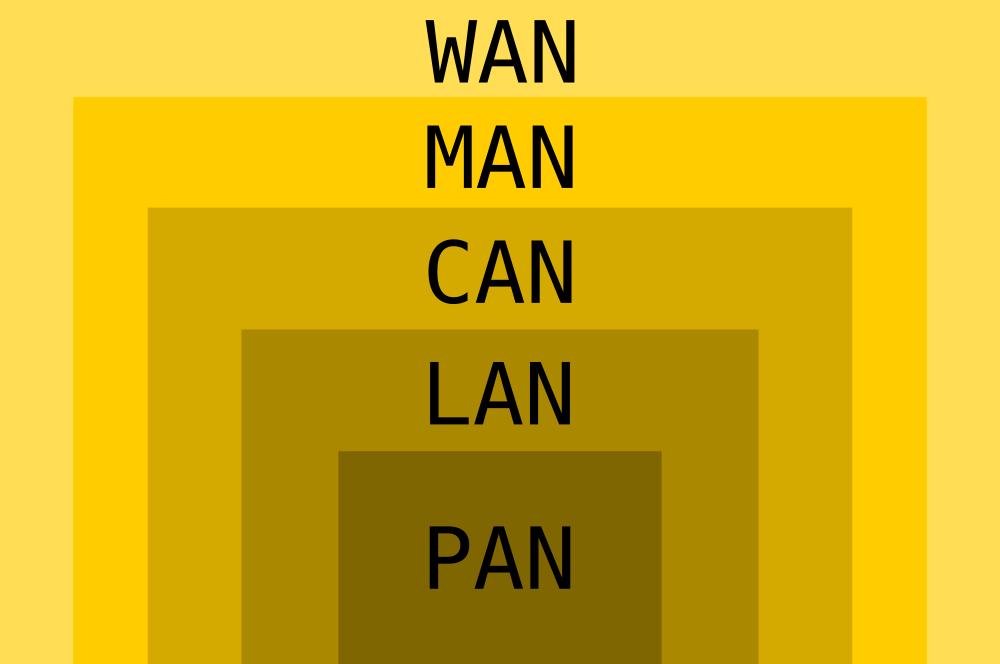
The geographical scale of computer networks ranging from PAN to WAN.
1. Personal Area Network (PAN)
A Personal Area Network is the smallest type of network. It connects personal devices that belong to a single user and are located very close to each other.
- Coverage Range: 1 to 10 meters.
- Technologies Used: Bluetooth, NFC, Infrared.
- Real World Example: A smartphone connected to wireless earbuds or a smartwatch.
- When It Is Used: For short range communication between personal devices, or to transfer files between a phone and a laptop without a cable.
- Key Points: Limited to the personal space of one individual. Doesn't require special infrastructure.
2. Local Area Network (LAN)
A Local Area Network connects devices within a limited and defined area. It is the most commonly used type of network in everyday environments.
- Coverage Range: A single room, floor, building, or small campus.
- Technologies Used: Ethernet cables, Wi-Fi.
- Real World Example: The Wi-Fi network at home or the wired network inside an office.
- When It Is Used: When fast and secure communication is needed between devices located in the same physical space.
- Key Points: Offers high-speed data transfer, is easy to set up, and provides better security since access can be controlled.
3. Campus Area Network (CAN)
A Campus Area Network connects multiple LANs spread across different buildings within the same campus or a group of buildings that belong to the same organization.
- Coverage Range: A university campus, school complex, or corporate campus.
- Technologies Used: Ethernet, Fiber Optic cables.
- Real World Example: A college where all departments, libraries, and hostels are connected to one network.
- When It Is Used: Used by universities or large schools to share the same network infrastructure across multiple buildings in close proximity.
- Key Points: Larger than a LAN but smaller than a MAN. Managed and owned by a single organization.
4. Metropolitan Area Network (MAN)
A Metropolitan Area Network covers a larger area than a LAN or CAN. It spans an entire city or a large town and connects multiple networks within that region.
- Coverage Range: A city or large town.
- Technologies Used: Fiber Optic cables, Microwave links, Metro Ethernet.
- Real World Example: A citywide network provided by an internet service provider that connects different parts of the city.
- When It Is Used: Used by ISPs or large organizations that need high-speed connectivity across a city (e.g., multiple office branches).
- Key Points: Larger than a CAN but smaller than a WAN. Provides high-speed communication over an urban area.
5. Wide Area Network (WAN)
A Wide Area Network is the largest type of network. It connects devices and networks over very large geographical distances.
- Coverage Range: Country, continent, or global.
- Technologies Used: Leased telephone lines, satellite links, fiber optic cables, the internet.
- Real World Example: The internet itself is the largest and most well-known WAN in the world.
- When It Is Used: Used when organizations, governments, or individuals need to communicate across long distances.
- Key Points: Covers the largest geographical area. Generally slower than a LAN due to distances. Relies on public and private communication infrastructure.
Classification Based on Transmission Medium
Networks can also be classified based on how data is actually sent between devices. This is known as the transmission method or transmission technology.
- 1. Broadcast Network: All devices share the same communication channel. When one device sends data, every other device receives it, but only the matching destination processes it (Communication Model: One sends, all receive). Examples: Wi-Fi, Ethernet using a bus setup.
- 2. Point-to-Point Network: A dedicated link exists between two devices. Data travels directly from sender to receiver. If not directly connected, data passes through routers/switches (Communication Model: One sends directly to one). Examples: The internet, leased lines.
Classification Based on Ownership and Access Control
Networks can also be categorized based on who owns them and who is allowed to use them.
- Private Network: Owned and managed by a specific organization. Access restricted to authorized users. Offers high security and privacy. Examples: A company's internal office network, a private cloud.
- Public Network: Owned by service providers/government and accessible to anyone. Covers a wider area but security is lower. Examples: The internet, public Wi-Fi at airports, mobile cellular networks.
- Hybrid Network: A combination of both private and public networks. Some parts restricted, others open to the public. Examples: A corporate office network connected to the internet, online banking systems.
Other Network Concepts: Internetwork, Intranet & Extranet
- Internetwork: A collection of two or more separate networks that are connected together and function as one large unified network. The internet is the largest example of an internetwork.
- Intranet: A private network that exists within an organization and is accessible only to its authorized members (e.g., employees, students). Used for internal communication, HR tools, and sharing documents.
- Extranet: An extension of an intranet that allows limited and controlled access to selected external users such as business partners, vendors, suppliers, or customers (e.g., an online banking portal).