

Types of Computer Network Architecture
A computer network architecture refers to the layout and structure that defines how devices in a network are organized and how they communicate with each other.
Based on how devices interact and share resources, network architecture is broadly divided into two types: Client-Server Architecture and Peer-to-Peer Architecture.
1. Client-Server Architecture
Client-Server Architecture is a network model where devices on the network are divided into two distinct roles. One set of devices acts as servers and the other set acts as clients.
The server is a dedicated machine that stores data, manages resources, and provides services to other devices. The client is a device that requests and uses those services.
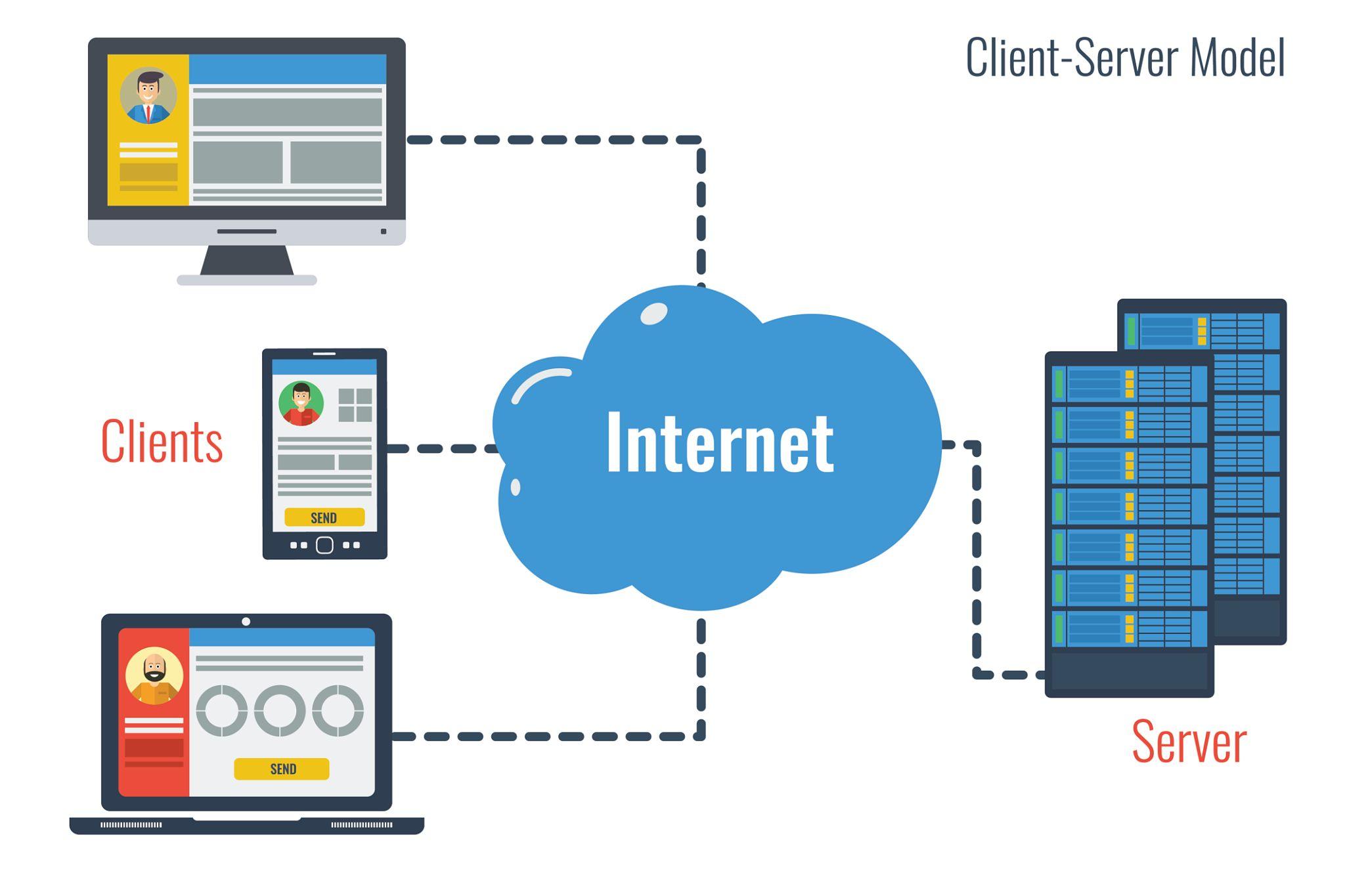
In a Client-Server Architecture, multiple clients connect to a central dedicated server to request resources.
How it Works & Examples
- How it Works: The client sends a request to the server through the network. The server processes that request and sends back the appropriate response or data. This cycle repeats every time a client needs a resource or service from the server.
- Examples: When a user opens a browser and visits a website, the browser acts as a client and the website runs on a remote server. When a user checks their email on a phone, the mail application acts as a client fetching data from a mail server.
Characteristics, Advantages, and Disadvantages
- Characteristics: The server remains active at all times and is ready to handle incoming requests. Multiple clients can connect to the same server simultaneously. The server is responsible for managing security, access control, and data storage. Clients do not communicate directly with each other and always go through the server.
- Advantages: Since all data is stored on a central server, it is easier to manage, back up, and secure. New clients can be added to the network without affecting existing connections. A single server can handle requests from a large number of clients. Security policies and access controls are easier to enforce from one central location.
- Disadvantages: If the central server crashes or goes offline, all clients immediately lose access to the network and its resources. The cost of purchasing, setting up, and maintaining a server is significantly high. When too many clients send requests at the same time, the server can slow down or become overloaded.
2. Peer-to-Peer Architecture
Peer-to-Peer Architecture is a network model where all connected devices are treated as equals. There is no central server in this setup.
Every device on the network, referred to as a peer, has the ability to act as both a client and a server depending on the situation. Devices can directly share files, data, and resources with each other.
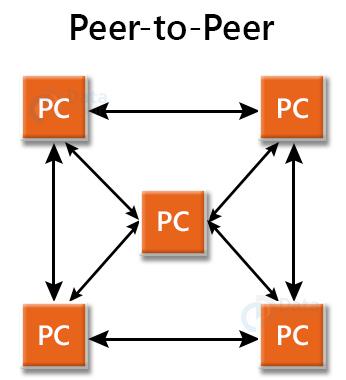
In a Peer-to-Peer Architecture, devices communicate directly with one another without a central server.
How it Works & Examples
- How it Works: When a device needs a file or resource, it directly contacts another device on the network that has it. No central machine is involved in managing or approving this communication. Peers interact and exchange resources among themselves freely.
- Examples: File sharing platforms that allow users to download and upload content simultaneously work on this model. Cryptocurrency networks like Bitcoin also operate on a peer-to-peer basis where every participating device holds a copy of the transaction record.
Characteristics, Advantages, and Disadvantages
- Characteristics: All devices in the network have equal status and responsibilities. There is no dedicated server managing the entire network. Each device can both request and provide resources. The network remains functional even if some devices disconnect.
- Advantages: Since there is no need for a dedicated server, the overall cost of setting up the network is much lower. The failure of one device does not affect the rest of the network, making it more reliable in that sense. The setup process is simple and does not require advanced technical knowledge. The load is distributed across all devices, so no single device bears the entire burden.
- Disadvantages: Without a central authority, it becomes difficult to enforce security and monitor unauthorized access. Managing and organizing data is a challenge since files are scattered across multiple devices. Performance depends heavily on how many devices are active and contributing at any given time. There is no central backup system, making data recovery harder in case of loss.
Difference Between Client-Server and Peer-to-Peer Architecture
| Feature | Client-Server Architecture | Peer-to-Peer Architecture |
|---|---|---|
| Control | Has a central server that controls the entire network. | All devices are equal and there is no central control. |
| Security | More secure and manageable. | Lacks strong security since there is no central authority. |
| Cost & Setup | Requires higher investment and technical maintenance. | Cost-effective and simple to set up. |
| Performance | Can be very high but server can become a bottleneck. | Performance depends on how many devices are active and contributing. |
| Best Suited For | Large businesses and organizations handling sensitive data. | Small networks and applications where direct sharing is the primary need. |
Sort the Concepts
Test your understanding! Sort the following characteristics into the correct network architecture.