

Disjoint Set (Find and Union)
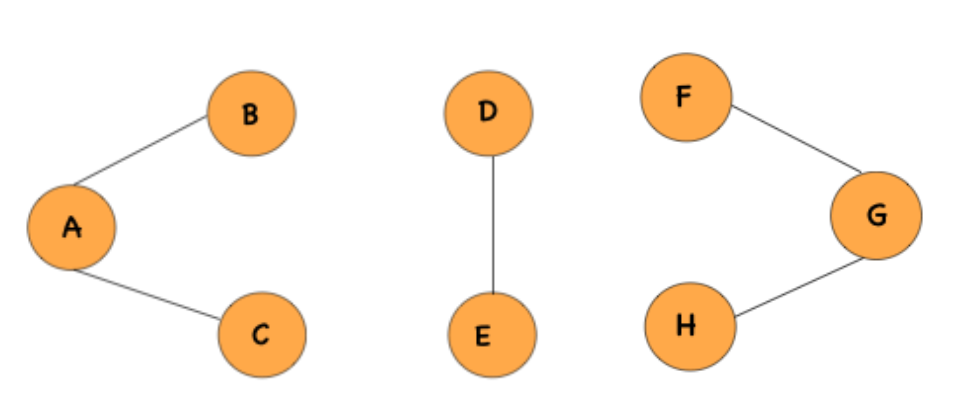
Set1: {A, B, C}
Set2: {D, E}
Set3: {F, G, H}
Operations
1. Find: Finds the representative (root/parent) of the set to which an element belongs.
Example:
- Find(B):
Set1 - Find(D):
Set2 - Find(H):
Set3
2. Union: Merges two different sets into one.
Example: Create a edge between [B, D].
As B ∈ Set1 and D ∈ Set2
- Set1 and Set2 are merged.
- All elements of both sets now belong to one common set.
- This set is represented by one root (leader).
Note: If both values belong to the same set, performing a union operation is not needed.
Both(Find and Union) these operations are very helpful in detecting cycles in a graph
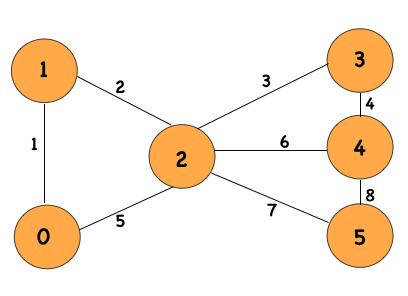
Exploring Edges
- (0, 1):
- (1, 2):
- (2, 3):
- (3, 4):
- (0, 2):
If edge (u, v) both u & v are present in same set then the edge form a cycle. - (2, 4):
Both in same set, so form a cycle. - (2, 5):
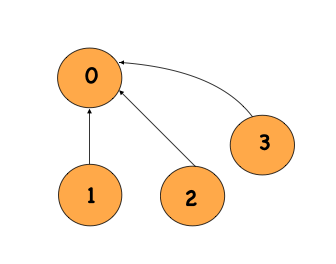
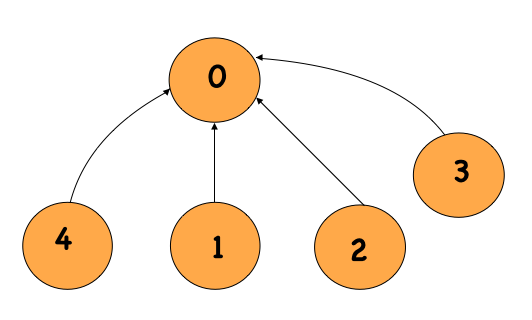
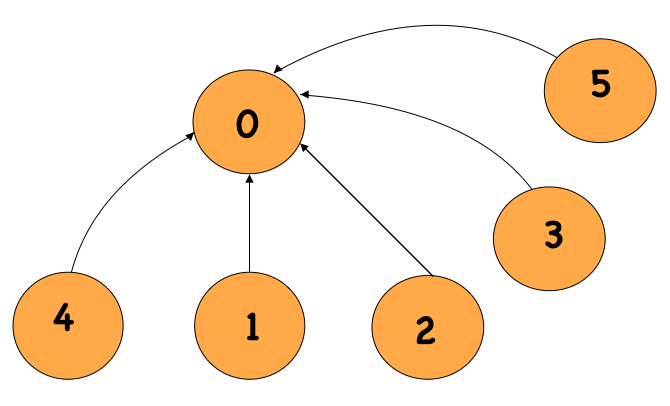
Rank
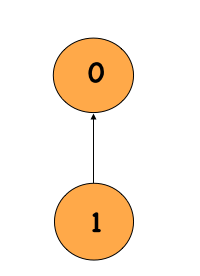
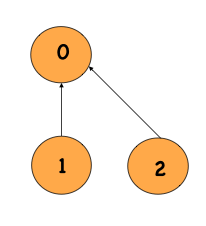
It is an optimization used during the union operation to maintain a balanced tree, helping the find operation run faster.
Solve with Array
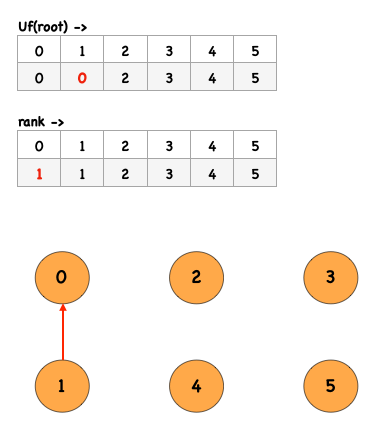
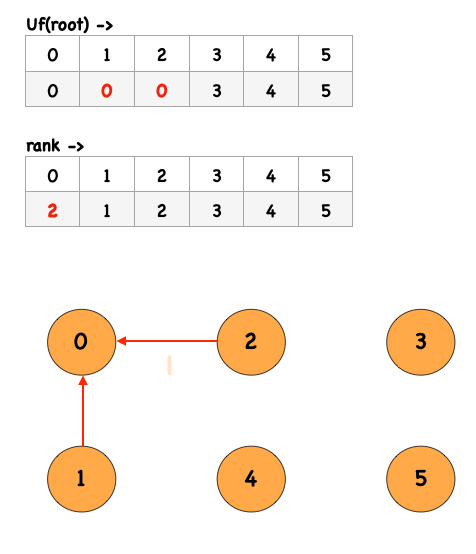
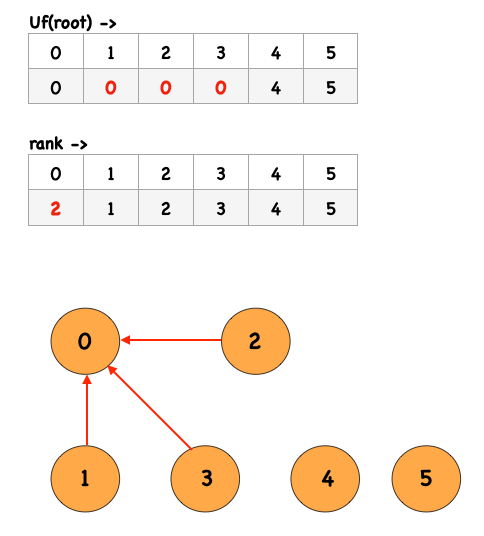
Both have same parent. Hence, Cycle detected.

