

How Do I Become Job-Ready in Backend Development with Node.js?
Want to become job-ready in backend development using Node.js? Learn the complete roadmap, skills, projects, databases, APIs, deployment, interview preparation, and how to stand out to recruiters.
How Do I Become Job-Ready in Backend Development with Node.js?
One of the most common questions aspiring developers ask is:
"How do I become job-ready in backend development with Node.js?"
The answer is simple:
You become job-ready by building strong fundamentals, creating real-world projects, understanding backend systems, and practicing consistently.
Companies don't hire developers because they completed a course.
They hire developers who can build, debug, and maintain real applications.
Step 1: Master JavaScript First
Node.js is built on JavaScript.
Before learning backend development, make sure you're comfortable with:
- Variables
- Functions
- Objects
- Arrays
- Closures
- Promises
- Async/Await
- Error Handling
- ES6+ Features
Strong JavaScript fundamentals make Node.js much easier to learn.
Step 2: Learn How the Web Works
Every backend developer should understand how applications communicate over the internet.
Important concepts include:
- HTTP
- HTTPS
- Request-Response Cycle
- Headers
- Cookies
- Sessions
- DNS
- REST APIs
These concepts form the foundation of backend development.
Step 3: Learn Node.js Fundamentals
Before jumping into frameworks, understand Node.js itself.
Important topics include:
- Event Loop
- Callbacks
- Non-Blocking I/O
- Streams
- Buffers
- Modules
- File System
- Process Management
These concepts help you understand what makes Node.js different from other backend technologies.
Step 4: Learn Express.js
Express.js is one of the most popular backend frameworks for Node.js.
Key concepts include:
- Routing
- Middleware
- Request Handling
- Error Handling
- API Development
- Validation
Most Node.js backend applications use Express or similar frameworks.
Step 5: Learn Databases
Backend applications rely heavily on databases.
You should understand both SQL and NoSQL concepts.
SQL Databases
Examples:
- PostgreSQL
- MySQL
Learn:
- Tables
- Relationships
- Joins
- Indexes
- Transactions
NoSQL Databases
Examples:
- MongoDB
- Redis
Learn:
- Collections
- Documents
- Data Modeling
- Caching
A strong understanding of databases is one of the most valuable backend skills.
Step 6: Build REST APIs
API development is a core backend responsibility.
Important topics include:
- CRUD Operations
- Request Validation
- Pagination
- Filtering
- Sorting
- API Versioning
- Error Handling
Most backend interview projects involve APIs.
Step 7: Learn Authentication and Authorization
Most real-world applications require user management.
Important concepts include:
- JWT Authentication
- Sessions
- Password Hashing
- OAuth
- Role-Based Access Control
Security is a critical part of backend development.
Step 8: Build Real-World Projects
Projects are often the difference between a learner and a job-ready developer.
Beginner Projects:
- Todo API
- Notes Application
- Blog Backend
Intermediate Projects:
- E-commerce Backend
- Learning Management System
- URL Shortener
Advanced Projects:
- Chat Application
- Food Delivery Backend
- Video Streaming Backend
Projects help recruiters evaluate your practical skills.
Step 9: Learn Git and GitHub
Most companies use Git every day.
Learn:
- Commits
- Branching
- Pull Requests
- Merge Conflicts
- Collaboration Workflows
Git is a mandatory skill for professional developers.
Step 10: Learn Deployment
A backend developer should know how to deploy applications.
Important topics include:
- Linux Basics
- Environment Variables
- VPS Hosting
- Docker
- CI/CD Basics
Deployment experience shows that you can work with production applications.
Why Namaste Node.js Can Help You Become Job-Ready
Many developers learn Express.js and MongoDB but struggle when interviewers ask deeper questions about how Node.js actually works.
Namaste Node.js focuses on helping developers understand backend engineering fundamentals rather than simply teaching CRUD operations.
The course covers:
- Node.js Internals
- Event Loop
- V8 Engine
- Async Programming
- Streams and Buffers
- Backend Architecture
- API Design
- Database Concepts
- Authentication
- Production-Level Engineering Practices
Understanding these concepts can help you perform better in interviews and build more reliable applications.
Instead of memorizing framework syntax, you learn the reasoning behind backend systems.
Recommended Learning Path
A practical roadmap could be:
- JavaScript
- Git & GitHub
- Namaste Node.js
- Express.js
- MongoDB
- PostgreSQL
- Authentication & Authorization
- Backend Projects
- Deployment
- DSA
- System Design Basics
Following a structured path helps avoid confusion and keeps your learning focused.
Step 11: Practice Data Structures and Algorithms
Many companies use coding rounds during interviews.
Important topics include:
- Arrays
- Strings
- Linked Lists
- Stacks
- Queues
- Trees
- Graphs
- Recursion
You do not need to become a competitive programmer, but solid DSA skills improve your interview performance significantly.
Step 12: Learn System Design Fundamentals
As you become more experienced, understanding architecture becomes important.
Learn concepts such as:
- Scalability
- Caching
- Load Balancing
- Database Design
- Microservices
- Message Queues
Even basic system design knowledge can help you stand out.
Common Mistakes to Avoid
Many beginners slow their progress by:
- Watching endless tutorials
- Building only tutorial projects
- Ignoring databases
- Ignoring deployment
- Avoiding DSA
- Learning too many technologies at once
Focus on building and applying your knowledge.
How Do You Know You're Job-Ready?
You are likely job-ready when you can:
- Build REST APIs independently
- Design database schemas
- Implement authentication
- Deploy applications
- Use Git confidently
- Solve basic DSA problems
- Explain Node.js fundamentals
- Build full backend projects without tutorials
These skills closely match what many companies expect from entry-level backend developers.
The Bottom Line
Becoming job-ready in backend development with Node.js is not about learning dozens of technologies.
It's about mastering JavaScript, understanding Node.js fundamentals, learning databases and APIs, building projects, and gaining practical experience.
A combination of consistent project building, interview preparation, and a strong understanding of backend concepts can help you confidently apply for backend developer roles and succeed in interviews.
With consistent learning and project building, many developers become job-ready within 6–12 months.
In most cases, yes. Express.js is one of the most widely used frameworks for building APIs and backend applications with Node.js.
Aim for at least 3–5 strong projects that include authentication, databases, APIs, authorization, and deployment.
Yes. Many companies use DSA rounds to evaluate problem-solving and coding skills during interviews.
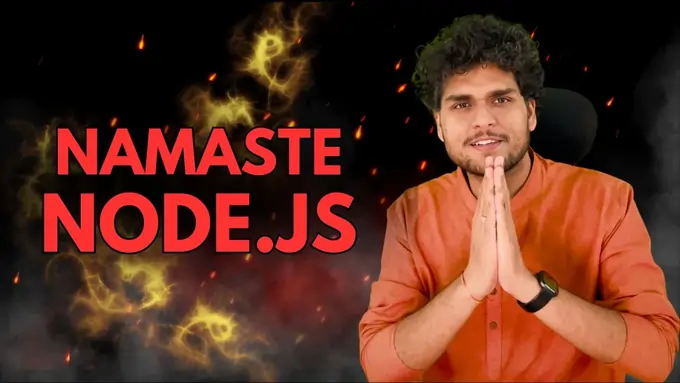
Namaste Node.js focuses on Node.js internals, event loop, V8 engine, async programming, backend architecture, and production-level concepts that help developers build deeper backend expertise.
Ready to master Node.js completely?
Want to upskill yourself, crack your next interview, and get your dream job? Join our comprehensive course to dive deeper with high-quality video tutorials, solve interview questions, and a premium community.
Master Node.js
Want to upskill yourself, crack your next interview, and get your dream job? Join our comprehensive course.