

Shortest Path – Bellman Ford Algorithm
It handles negative edges.
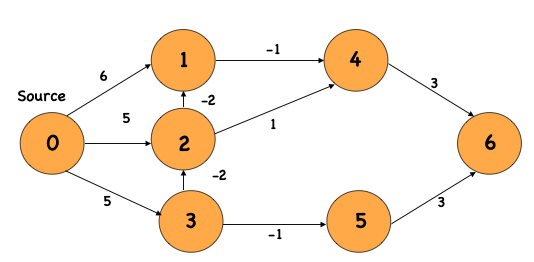
Relaxation is the process of trying to improve (reduce) the shortest distance to a vertex using an edge.
How Relaxation Works?
For an edge u → v with weight w:
        If distance[u] + w < distance[v]

        distance[v] = distance[u] + w
Why relaxation is repeated in Bellman–Ford?
- Bellman–Ford relaxes all edges V−1 times.
- Because the longest possible shortest path can have at most V−1 edges.
- Each relaxation gradually propagates shorter paths across the graph.
First Relaxation Process
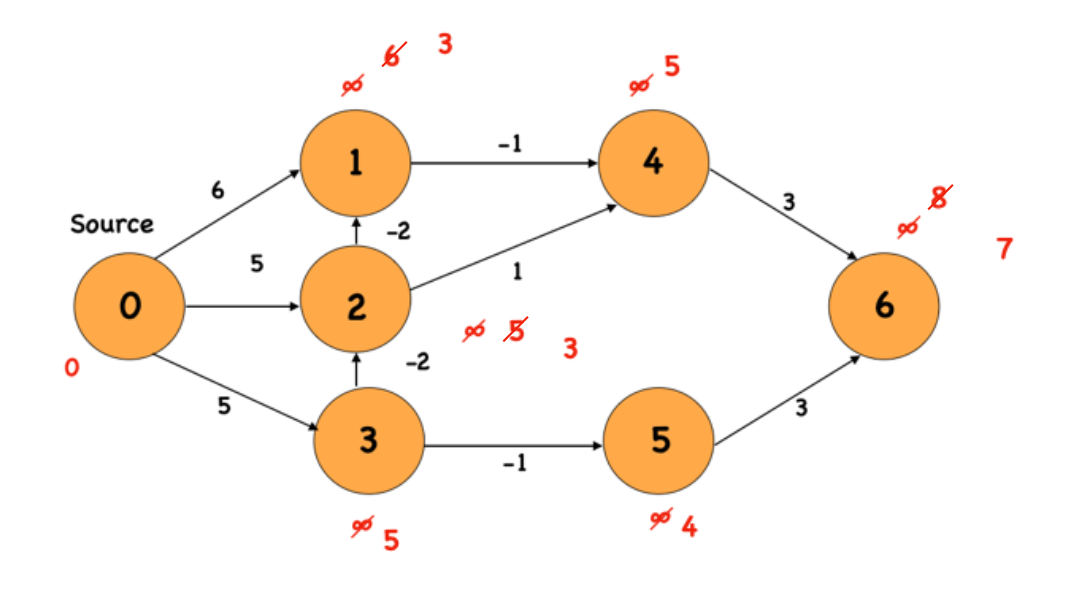
Updated Values:

Second Relaxation Process
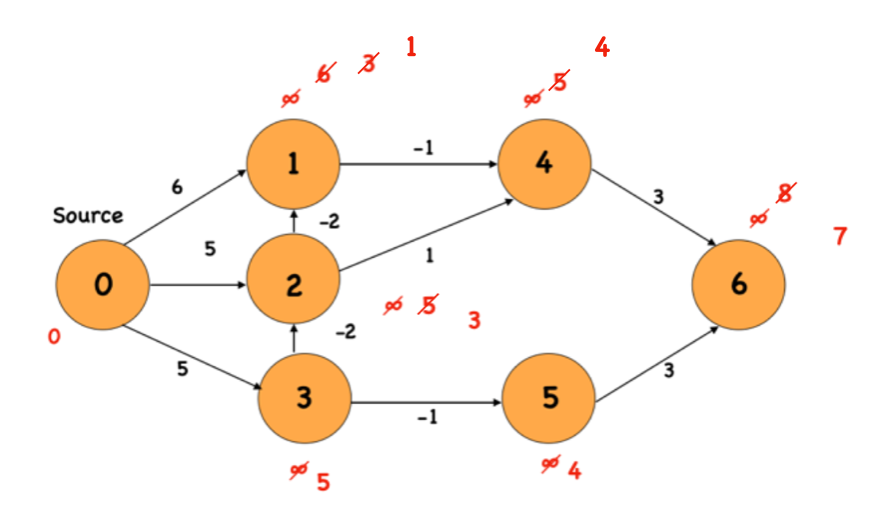
Updated Values:

Third Relaxation Process
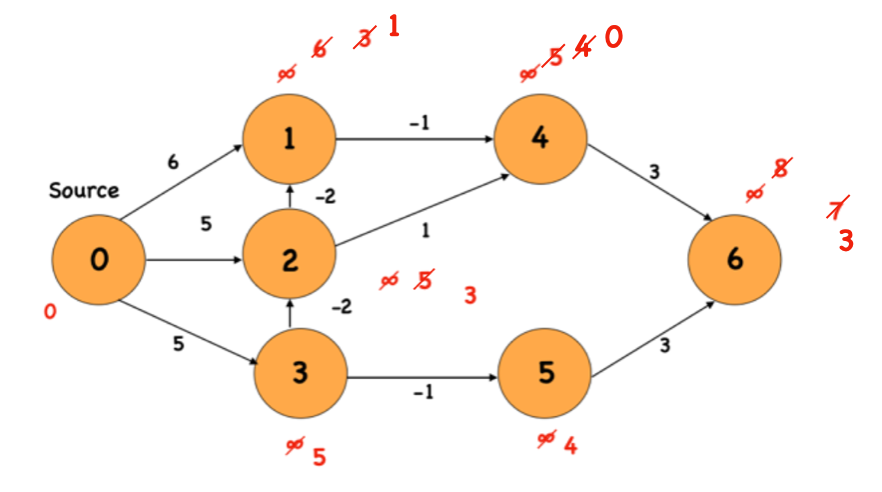
Updated Values:
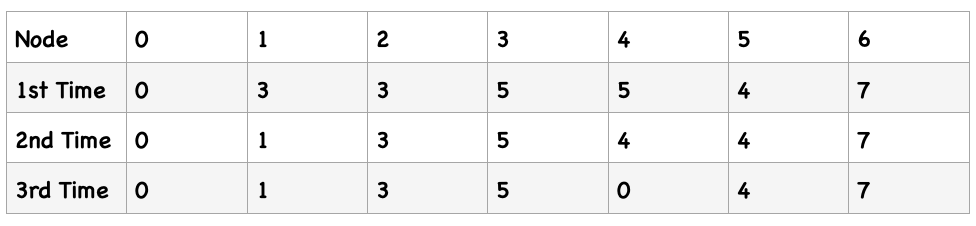
Fourth Relaxation Process
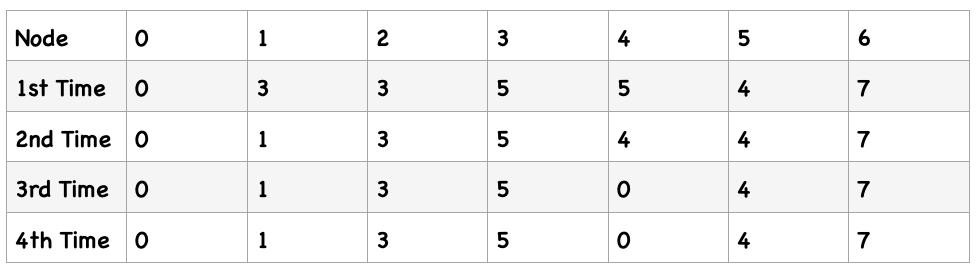
After the final iteration, if no values change, the process is stopped.
The final answer is obtained in the last step.
If your graph has a negative weight cycle, the Bellman–Ford algorithm fails.


